04 October 2010

Life after Drowning

Imgp3293-edit

Is it possible? In the case of cameras, apparently it is.

A couple of weeks ago I was checking out the early (too early as it turned out) fall colors up one of the local Wasatch Mountain canyons. Coming down from the long hike I was not a little tired and fording a small stream slipped. I often hike with a tripod-mounted camera in one hand and, and, depending upon the scenery, an infrared camera in the other with the rest of the gear in my Lowe Pro back pack. This was not the first time I have fallen with no hands free to protect myself, so you’d think, to paraphrase my understanding wife, that I’d learn. Evidently, not so.

At any rate, down I went into the stream, my right hand holding aloft the tripod and my Pentax K-20 mounted with a Sigma 10-20mm. Approximately $2000 worth of non-water proof gear. I got wet but not that gear. Unfortunately I can’t say the same for my infrared-converted Pentax DS: it flew out of my hand and into a pool of water. The pained squawking noise I was making had less to do with my bruised posterior than with the fact that I was watching my out-of-reach camera (mounted with a prime Pentax 20mm f/2.8 lens) slowly sink to the bottom of the shallow pool. I felt like the proverbial turtle on its back: in an awkward position, struggling to right myself and reach my submerged camera. It didn’t help that the backpack and muscle cramp in my left calf was conspiring to keep me ground-bound and my camera submerged.

Finally I was able to pull myself up and grab the camera strap to lift my dripping camera out of the water. It seemed like it had been under for several minutes but in reality it was certainly no more than 10-20 seconds. Time enough! Even the weather seals on my K10 and K20 would have been hard-pressed to resist the cold, flowing stream water.

I pulled the batteries out -- if ever in a similar situation, don’t turn on a wet camera as you run a good chance of shorting out the electronics -- and opened up the various doors, pulled the SD card out and twisted the lens off. Water ran out of every orifice. “Toast!” I thought, “Perhaps the camera docs can breathe life back into it.”

Once home I opened all the camera’s doors and left the lens off in the hopes that our dry Utah climate would work its magic on the camera. The lens itself was fine. If I had had a cheap plastic lens perhaps I would not have fared so well, but this 20mm is a fine prime and apparently well-sealed.

After a couple of days, I dropped some batteries in and turned on the camera. All seemed well at first as I reset the date but then all of a sudden the LCD panel began displaying characters that looked to be a cross between Cyrillic and Klingon. Looking at the LCD monitor I could clearly see water behind the glass. I quickly pulled the batteries out and gave it another day. Returning to it a day later I popped the batteries in, set the date and Lo and Behold (imagine trumpets and angels), it lives!

Perhaps life after drowning is not as rare as I had imagined. I found several posts online discussing just this and also advanced some additional treatments such as the use of white rice (uncooked, to be sure) and silica packs to help absorb water. These would likely help in more humid environs than the Southwest. I’m a happy infrared camper once again and I swear that the dowsing even took care of three annoying spots on the sensor I could not seem to remove by more reasonable measures. Of course, I can’t recommend to everyone sensor cleaning via drowning, but it seems to have worked for me!

21 September 2010

Travels with Non-Photographers

Generally, I take three types of photography trips: solo, with one or more photographers, or with my patient and long-suffering wife (who is decidedly not a photographer).

The first type of travel is easy: I do what I want, when I want and take as much or little time as I wish doing it. The down-side is that if you are rut-prone, you may stay in it longer than think, not even realizing you have a wheel or two in the ditch.

Traveling with other photographers can introduce compromise into your schedule and subject matter. But that is often leavened with the opportunity to sound new ideas, bounce concepts off of each other and try things you might never have thought about. In other words, you may find yourself pulling out of that rut. Good traveling companions are important though. Stubbornness is rarely a virtue in a group. Patience is though, as photographers understand each other at least enough to know that good image making takes time and perseverance.

My wife...what can I say? She is the ever-patient photo-widow one could only wish for. She understands that I need the time and space to make my images. She also understands that sometimes it may be best for her to not venture out for those late evening Provençal village strolls or a sunrise on the Charles Bridge. She knows that I will be taking just a bit more time than she wants to give, and I understand that. During the day she slowly sight-sees and I slowly capture my scenes. Occasionally she'll swap a camera out of my pack or hold my tripod for me. I will occasionally say, yep, that's a nice ceramic plate...buy it. It's a good partnership.

But what about traveling with a mass of non-photographers? Sounds like a recipe for frustration, non? It can be but like most things, it is all in how you manage it. I got a full dose of that recently when my wife and I traveled to Provence to celebrate our 25th wedding anniversary with 19 other people...non-photographers mind you. Oh sure, there were a lot of cameras, and even two other DSLR users, but no one else (crazy enough) trying to make a living at photography!

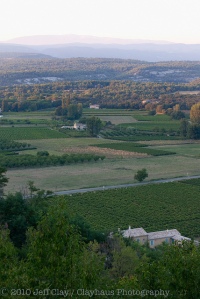
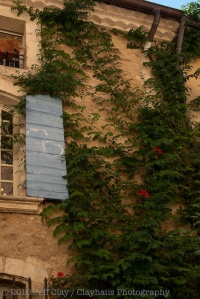
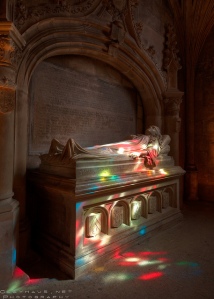
So, did it work out? Did I get frustrated? Yes and almost never. The trick was to let them do their thing and I would do mine and we'll meet in another hour or two (or more). C'est parfait! I got to wander narrow medieval cobblestone alleys or shadow-ridden Roman corridors with my only constraint being to meet the others at a certain time. I can work with that. The time allotted was not always enough, but usually that had to do with the overall day agenda that I (fortuitously) set. Often I was a bit aggressive in estimating what we would be able to cover in full, busy day. But, we made adjustments as needed. Waiting for folks does try one's patience, but I can honestly say that I waited for others as seldom as they waited for me. A reasonable approach and attitude begets a satisfactory outcome...n'cest pas?

CountrysideIvyWatchingSweet_dreams

31 August 2010

Lessons from an Art Festival: Saying "Thanks" and Meaning it

Pcartsfest-2

Believe me, it may not seem like it to those of you popping in and out of our booths, but it is hard work to stand around for 5-10 hours, greeting you, the interested and perhaps even buying patron, with a smile and a “Hello.” And then when you compliment us on our work – as you often do and usually upon exiting empty handed from our booth – I must say “Thank you!” and mean it.

So what is so tough about that you ask? For some, perhaps many, it is no biggie. The jeweler women on either side of us at the Farmer’s Market always seem warm and chipper. I’m not. On the other end of the art festival spectrum there are those booths occupied by GDAs (Grumpy Dudes with an Attitude). Not a role model. My goal is to be engaging and open and truthful. And, that is at times Work!

I don’t mean to imply that being deceitful, obtuse or disinterested comes naturally. But, sometimes it is easier to be lazy, to not rise to meet people, to not greet people, to say “thanks” and not mean it. It’s obvious that this not what one should be doing, but after a long day – or a couple of even longer days – laziness sometimes comes a-knocking. Don’t answer the door!

How you interact – or don’t – with your potential customers is extremely important. To facilitate this you must become adept at reading those who enter your booth. Some clearly don’t want an interaction: lack of eye contact and mumbled response when you say “Hi!” are your sure give-aways. I try to always greet folks and I find “How are you?” is a better gauge of their willingness to connect than a mere “Hello.” If they don’t want to talk, leave them alone and perhaps say “thank you” when they depart. To those that do seem warm to my presence I will usually add, “Let me know if you have any questions” as a sign that I too am willing to engage.

Many of the questions I get are of the “what kind of cameras do you use” or “do you have any photos of whales (or planes or beaches in Oregon or ashrams in India…you get the idea).” The trick is to answer each questioner as if I have both never heard it before and it is one of the most interesting things ever uttered. They don’t know that I have already told the 3 previous people that I shoot with Pentax DSLRs and a Hasselblad XPan II nor can they assume that just because I don’t have any images of eagles hanging in my booth I might have some matted in the bins. Each person is unique and should be treated thusly, and so I tell myself.

Occasionally pros or semi-pros as well as real tyros will ask good questions (often about my infrared work) and a full-on conversation/discussion unfolds. These are great. I love sharing information (I said I was open didn’t I?) and think it is funny that others “hide” their methodologies and techniques. Fortunately there are few of those folks and the photog community is genuinely quite willing to share their “secrets.” The only problem is that sometimes we get so wrapped in the discussion that I fail to see the other people in the booth. I try my best to acknowledge them without sacrificing an interesting conversation that may grow to an even more interesting connection.

When compliments are spoken they should be treated as gold. Perhaps not a currency that can purchase anything (I have several tens of thousands of dollars worth of compliments safely banked in my imaginary safe deposit box) but they do mean something. After all, a visitor does not have to utter anything (and many don’t) so I take it as GENUINE when someone says “I like your stuff” (I know: “stuff?”) or “great images” (better) or “you really have an eye for composition” (plus better) or “this is so unique” (Bingo! Ding Ding Ding! You’ve hit the jackpot!).

So I promise, if you come into my booth late in the day, perhaps even while we are breaking everything down, I will do my best to say “hi” and maybe even chat. It’s the least I can do since you have taken the time and effort to look at my work. And if you pay me a compliment, truly I will say thank you and truly I will mean it (and my account grows!). But if you ask me if I have any duotone photos of dolphins jumping out of the water off the coast of Maine with a submarine in the background and a falcon soaring overhead whilst holding a rabbit, well, I just might have to tell you that I’m working on that...when I actually am not.

24 August 2010

Lessons From an Art Festival: Booth Matters

Pcartsfest-3

At the Salt Lake Farmer’s Market -- where I have a booth every Saturday -- we have 3-5 feet of space to the right and left and plenty of storage room behind the booth. We don’t normally put the sides down on the canopy (though the back we do because the sun shines in during the morning). There are 12 white grids around the perimeter upon which hang about 50 framed color and B&W images. In the center of the booth is a long table that holds several bins for matted images. Traffic flows in a U shape through the booth and usually with little congestion. My wife and I normally site outside the booth with a small table, which operates as our “office.” So, the Clayhaus Photography booth is relatively open and airy with a spacious feeling conducive to image viewing and discussion, or so I feel.

We arrived early for our designated set-up time at the art festival, and were in for a bit of a shock. The other vendor booths to our aft, port and starboard side were firmly in place and we were supposed to squeeze our 10’ x 10’ booth into a, yes, you guessed it, 10’ square space. We should have thought through the ramifications of that. Yes, I perseverated for a week or two wondering how I was going to fit all my 5‘ x 8’ trailer’s worth of gear into a nice box like our spot, but no real conclusions were reached. Because we were sorting through these issues whilst erecting the booth, set-up took twice as long and more importantly, compromises were required. Other than setting up our “office” ten feet away on the sidewalk (like others were doing), we had no spillage to any sides. That box was tight. I still needed to maintain the U flow though so I cut down on a few other items (a 2nd card spinner and a 2nd matted prints artist easel). The tight feeling was compounded by all the canopy walls needing to be in place. The light was therefore reduced (though it also kept out the rain!). Definitely a compromise of sorts was achieved.

My booth looked “good” but in scouting other booths I came to several conclusions that would help me improve my presence. One, the booth should be attractive, inviting, and professional looking. Two, flow-through is muy importante. And, three, the actual booth location matters.

It is a matter of degrees, of course. After all, I do consider that my booth looks attractive and inviting and has at least a modicum of professionalism. However, there is no doubt that some upgrading would help. For instance, grids are okay but panels such as ProPanels look soooo much nicer and more professional. Enough to spring for the buggers? Not sure yet. Also, I have an assortment of singular framed images that vary in size from around 11”x14” to 24”x30”. I saw many other photographers concentrate on less variety in images and produced much larger prints. Something to consider.

Fortunately I figured out early on that if my booth had a dead end, it would result in a Sargasso Sea effect of potential customers milling about, bumping into each other, whilst trying to escape. Not good for people wanting to look at your work and certainly not good for business. I saw the best flow in corner booths where the artist really worked that position resulting in customers entering and departing relatively seamlessly. Would I pay the extra cash for a corner? In a word, ‘yes!’.

Finally, in some festivals you can request the actual position of your booth. If you know the venue it may be well worth the extra cash outlay to secure a somewhat centralized position. Being relegated to the extremities of a festival is definitely not good. Nor, necessarily, would I want to be next to the band stand. (Unless of course if Jeff Beck or John McLaughlin were playing.)

There is no doubt in my mind that come next year’s festival season, the Clayhaus Booth will have undergone some upgrades.

23 August 2010

Lessons From an Art Festival: Talking to Other Vendors

Pcartsfest-4

Other artists -- especially if you are a relative newbie like me -- can be valuable resources in your quest on the art festival circuit. You can learn from them and most of them -- once they see your “Artist” badge -- are happy to offer suggestions and advice. 

From a pure courtesy standpoint, I got to know our neighbors. One had been attending the festival since the 90’s, so he certainly had the logistics locked down. But, beyond the near-by rock-workers, potters, jewelers, and organo-metallic mixed-media artists, I sought out other photographers. What did I what to know?

For one, I am always appraising the way others set up their booths. I want to see how traffic flows, what kinds of materials and display products they are using and beyond that, the sizes and types of images they are framing and how, and what they are offering as matted work. (In another post I’ll have some comments on booth set-up and location.) In short, I’m looking for ideas on how to improve my presence. Questions such as “how do you like those display panels?” or “ where did you get that bin?” are standard I-need-to-upgrade-my-booth queries.

I am also interested in other people’s work and will consequently engage the photographer, asking questions about location, time of day, camera format and perhaps focal length (though rarely camera make, as it matters little to me), framing (if unique), and other types of questions. It’s a conversation not an interrogation and most artists are happy to discuss various aspects of their work.

I can speak from experience when I say that photographers want to know that their work is appreciated, even if the comments are coming from another photographer that has no intention of buying anything. So I will find pieces that really appeal to me -- normally not a difficult task -- and complement him/her on them. Not just, “that’s nice” but WHAT is nice about it. It means a lot to me when others engage me like that, so I must assume it matters to them as well.

If it hasn’t already, inevitably the conversation will turn to how the show is going. This is good and you will be able to validate -- or not -- your own sense of the festival. What is not cool is getting into specifics. I frankly don’t want to know that Mr. A has moved x number of framed images or that Ms. B has netted y number of dollars. You open yourself up to either disappointment or elation at someone else’s’ expense. Neither is good. It is important for me to have a good show, not a better show than Mr. A or Ms. B.

From my mere three days at the show, I sense that the art festival circuit is a community: cooperative, not competitive. Of course in a way we are all competing for a finite pool of dollars and even more so within categories of art. But my sense is that generally the artists understand that while there will be relative differences between people’s receipts, a good show will benefit all. This fosters a sense of trust and community that we could perhaps look for in other areas of our life, I do believe.

12 August 2010

Lessons from an Arts Festival: Que Sera, Sera

Artsfest-1

This, and the following related posts, are take-aways from my first multi-day, regional arts festival. For the past couple of years, I have been showing & selling my photographs at weekly “farmer’s markets” as well as a couple of strictly local, one day festivals. So, I am a relative newbie to the art festival circuit and my comments and discussions should be considered in that light. Besides, they really are MY lessons learned. For you folks who may have been on the art circuit for years, decades perhaps, I would surely love to hear your lessons!

Now I’m not a huge fan of Doris Day, even if she is iconic of a (ridiculously) idealized time and place (think squeaky-clean 1950’s ??TV-era America and you’re arrived in nirvana). But her singing of the pivotal tune Que Sera, Sera (Whatever Will Be, Will Be) in the 1956 Hitchcock film The Man Who Knew Too Much has always stuck with me. Whatever will be, will be. Is it a call to complacency, even existential immobility? I don’t think so. The key is in the third line: The future's not ours, to see. I interpret this as: do what you can, perhaps even all you can, then the rest, the results and outcomes, lie in the future, with fate.

Now what in tarnation does all this have to do with an arts festival you might be asking yourself! Well, the title of this post could also have been “Managing Expectations.” A number of people asked me prior to the festival what my expectations were. I would answer philosophically, “I really don’t have any.” That of course was partly true. Never having attended a festival of this magnitude, I was just glad to be invited. At least initially. Once I started preparing for the festival – printing cards, matting prints, etc. – I began harboring hopes for a really big show, all the while telling myself to manage expectations!

How good of a job did I do managing those expectations? As the French would say, “comme ci comme ??a.” So-so. I never got into the numbers game: expecting to sell x number of pieces while making y number of dollars. Slip into that and you are ripe for disappointment. Nonetheless, the word on the street was that this was shaping up to be a slow show, meaning lower than usual attendance and lower than expected receipts. So, I began to actively manage those expectations and try to chase away any thoughts of disappointment.

In the end – though I have no empirical attendance and sales data for the overall show – for me, it was a fine experience and a festival I would happily attend again. I did well, and really all you can do is give it your best shot and trust that what will be, will be. Que Sera, Sera.

11 August 2010

Cards, Part II

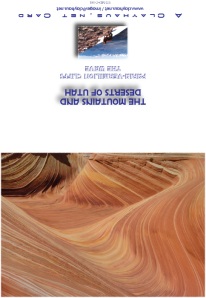
As a follow-on to my previous post about creating and selling cards, for any of you interested in doing the same, I thought I’d take a moment or two to detail the cards and suppliers I use.

First, I purchase most of my papers through a local Utah distributor, Ink Jet Art. Their prices are very competitive and they have an extensive supply of glossy, luster, satin, matte art and photo papers from such manufacturers as Moab, Harman, Ilford, Hahnemuhle, Illuminata, and Epson. They also carry inks, printers (Epson and Canon), and various manufacturers of canvas (I guess I should try printing on that someday). Ink Jet Art also carries two lines of cards and various paper and glassine envelopes for the cards. One line of cards that I occasionally use is Crane Museo. This stock is 100% cotton and really holds nice detail on its matte and lightly textured surface.  It comes in various sizes from 4.5” x 6” to 5.25” square to one of my favorites, the panoramic 4” x 9”. Ink Jet Art also carries what has been my go-to matte stock for the creation of 5” x 7” cards: Moab La Sal. This paper is a very smooth, matte-finish alpha cellulose 235 gsm weight stock. As with the Crane Museo, this stock is pre-scored and double-sided for printing. Unlike the Crane products you will need to order separate envelopes, which Ink Jet Art carries as well. They ship nationally and of course if you are in the Beehive State, you can will call as well.

I’m a big fan of matte and luster papers, but not so much glossy papers. However, my wife kept insisting that my cards would “pop” more if I found a glossy, pre-scored card stock to print them on. After searching, lo and behold, I found the stock that I have been using for over a year now: Red River Papers. They carry both glossy and matte cards stock, as well as linen and 100% cotton. I’ve used two different weights of the glossy stock and wife claims they look great (and I’m not arguing!). They also recently starting carrying a 100% recycled content matte finish card stock and after testing, it looks very good next to my Moab La Sal cards. Red River is not local to Utah but they deliver very quickly.

If you have some other paper sources out there for printing cards, let me know…I’m always keeping my eyes out for new and different ideas and products.

Card2Card1